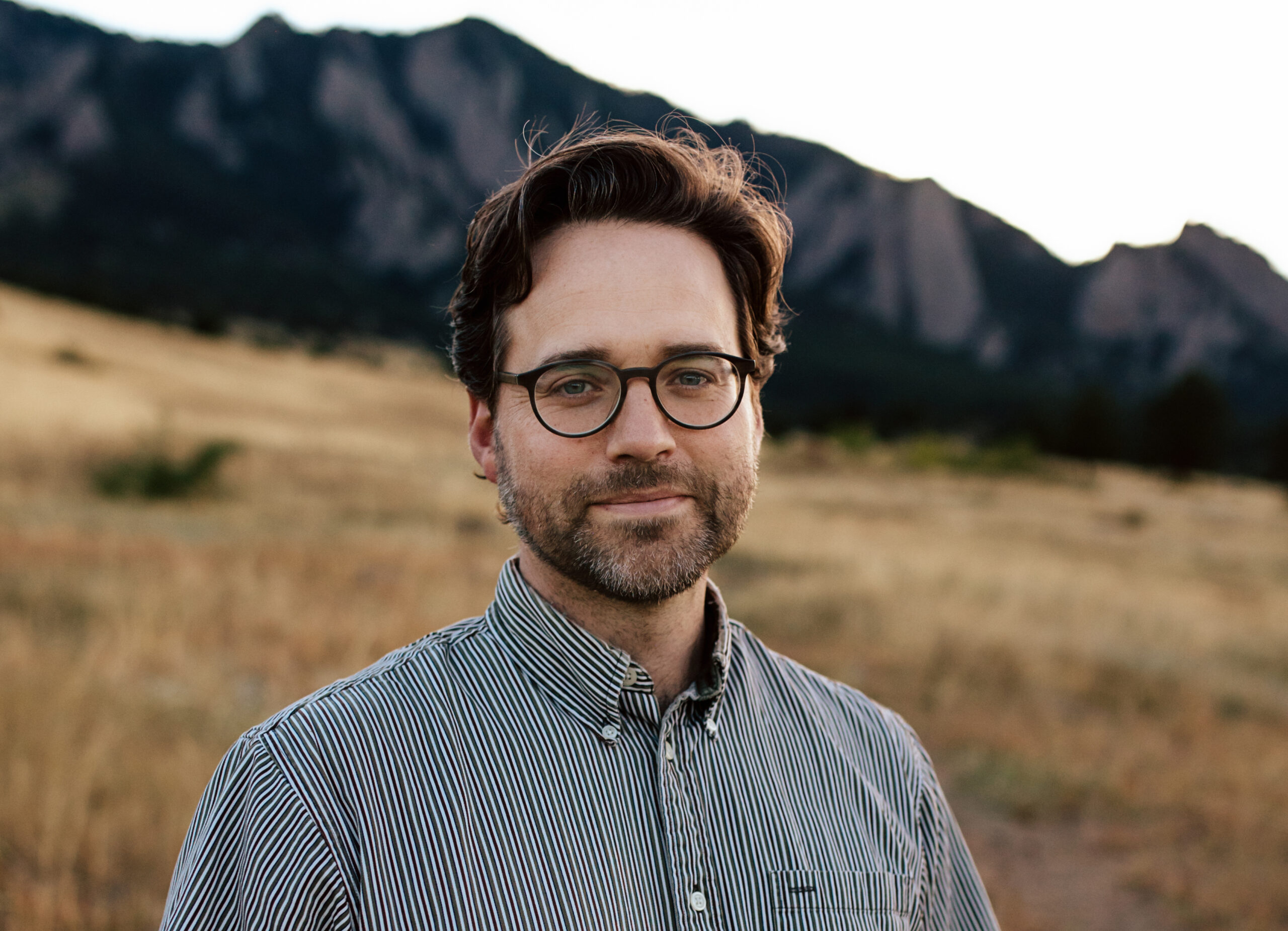


Nathan Schneider has spent roughly 15 years as a journalist and academic trying to understand democracy in the 21st century through Occupy Wall Street, cooperatives, the blockchain, and currently, federated social media. This week on Reimagining, Nathan explains how poor democracy on major social media platforms has eroded our actual democratic governance, and how practicing democracy in everyday ways can teach us how to practice it well again.
Nathan Schneider wrote the fantastic Governable Spaces, out now on UC Press and freely available online. He has also joined the show previously for a two-parter on platform cooperatives and blockchain governance. He also helps run the Mastodon instance, social.coop.
Transcript
ETHAN ZUCKERMAN:
Hey everybody, welcome back to Reimagining the Internet. I am thrilled to be returning to the podcast with just one of my favorite people. I’m here today with Nathan Schneider.
Nathan is a professor of media studies at UC Boulder where he directs the Media Economies Design lab. He’s the author of a really brilliant book called Governable Spaces which came out last year with the University of California Press. He’s edited two other important books around online governance and cryptocurrency. Just a great person to be talking to about the social internet.
And I will say in an amusing twist he is one of the leaders of social.coop which is the cooperatively owned and maintained Mastodon node where I keep my Fediverse presence.
Nathan, a friend of the show, returning after your appearance on episode 51 as now our Fediverse expert. So good to have you here.
NATHAN SCHNEIDER:
Thank you for having me back.
ETHAN ZUCKERMAN:
Well so look it seemed like a great time to bring you here to talk about things because so much of your expertise is about who owns the social media platforms that we all use and interact on. What it means that many of these platforms are owned by extremely powerful people.
We are having this conversation in February 2025 not long after Donald Trump’s inauguration where he was flanked on stage by notable figures like Elon Musk and Mark Zuckerberg. Give us sort of a state of the social web in February, 2025, Nathan.
NATHAN SCHNEIDER:
I think we’re in a moment of fragmentation and disappointment in some respects. We’re at a moment where in some—we’ve seen a kind of dystopian event occur, right? The very thing that people interested in decentralization, open source, pro-social networks feared would happen which is like essentially the capture of social networks by billionaires and states happen.
We now have essentially state social media in the form of X, where a government agency, pseudo-agency DOGE is posting primarily to the platform as its means of communicating with the public—where we have this deep imbrication of a certain kind of political power with social media networks. Everything we kind of feared is happening in an almost cartoonishly exaggerated way.
And yet we see a sense that there are alternatives, but those alternatives have not swept in to replace these dominant forces. You have some of the most powerful people in the world people like Mark Zuckerberg essentially kissing the ring of a particular political leader in order to have kind of legitimacy and to be able to continue controlling the voices of billions. And yet his networks remain the most powerful in the world.
And so there is this incredible moment of capture. We’ve had moments of capture before this is not entirely new and it’s by no means limited to this side of the political spectrum. But at the same time we’re seeing the way in which the alternatives are not stepping in to replace this kind of capture. And even though in certain subcultures they have and there’s progress and there’s some momentum, we’re seeing just how vulnerable our networks are.
ETHAN ZUCKERMAN:
So that moment of capture and that very evocative phrase that you just used of “state-controlled social media” is exactly what I want to talk about. And I particularly want to talk about this question of why the exodus from these networks hasn’t yet been the golden moment for the Fediverse.
But I want to offer maybe a very compact history of how we got here and I want to hear how it aligns with your history. You and I both study a lot of technology and history we understand why these histories are important. So I’m curious what’s missing from my history.
I tend to date a lot of this back to 2016, where we had all of this panic about fake news affecting US elections. And obviously it’s the same year as Cambridge Analytica which comes out after the fact it’s the same year that we have the Brexit surprise in the UK.
We have the emergence of almost a missing disinformation countering industry. It becomes extremely common in academic circles to figure out how we can counter missing disinformation.
And we head towards 2000 where we have two disinformation crises. We have COVID and we have the 2020 election and the disputed results. And platforms take a lot of action a lot of which I think is admirable to try to protect speech but very much get seen as a left-wing capture of those platforms. We have a right-wing response with the launch of Gab and Truth Social and Rumble and a lot of these other things.
And now in 2024 as it’s become increasingly clear that this is a leader who demands personal loyalty and personal fealty, we seem to have moved from neutral misinfo balancing, maybe leaning left to now explicitly the leaning right social media. Is that a rough outline or sort of what are we missing in that history?
NATHAN SCHNEIDER:
I think it’s a really good outline. It’s really important to see this moment in relationship to 2016 to 2017.
There are a few other things I’d add in there. And this is first something you were alluding to at the beginning is that transformation of the vision of social media as the platform, as the kind of neutral platform into becoming a kind of weaponized technology. And it was never a neutral platform, but we’ve kind of—especially with Elon Musk taking over Twitter—there is this kind of loss of even that claim that these spaces are designed to be kind of neutral and safe for everybody, that kind of liberal vision and instead this sense that this is a kind of nationalist vision. This is a tool against certain mind viruses.
Second, the longer history that I think is important to tell here and this is a central story in my book, Governable Spaces, is that we’ve been preparing for this for a long time. Developing this experience of online social life that is built around what I call implicit feudalism. It’s built around this assumption that admin has—all power to the admin. Whoever’s controlling the server, whoever’s controlling even the group or the group chat, even at the smallest scales that a kind of monarchism has taken hold in the cultural norms around our social media.
And what I argue in that book is that slowly that cultural norm has been bleeding into mainstream politics. And here we see a real manifestation of that where the exact playbook used for taking over a social network is now being used for a transformation of the US federal government.
So we’re seeing norms that were developed in online spaces which are profoundly at odds with I think civic, democratic culture being now very literally transposed into politics.
Finally, one other piece that is so important is labor. And a big part of the story that you just told about the 2016/2017 adoption of the kind of trust and safety regime was also a turn toward expertise and toward people. And what happened then later 2017, 2018, 2019, 2020 was a kind of growing tech uprising, especially against militarized tech, especially against militarized AI, that I think really put a sour taste in the mouth of people—CEOs and board members and investors—who saw that there was a huge financial opportunity we are missing by not being able to do profoundly unethical things with our technology.
And now with AI there is this sense I think that we can do away with human expertise, whether it’s trust and safety teams or the federal government. We can replace those systems with AI. And we can pursue maximum financial returns without the friction that labor unrest creates.
And so the role of labor, the kind of shock that came to the tech elite by seeing their workers refuse to build things that they perceived as unethical, I think is a really, really important part of the story. And Elon Musk’s mass firings at Twitter were a critical moment for inviting the rest of the industry to embrace a kind of crackdown on worker voice.
ETHAN ZUCKERMAN:
There’s so much in there and I’m tempted to embrace this whole move fast and break things idea and sort of think about how move fast and break things is applying to the government. And one of the things that Mike Sugarman, our producer here has pointed out to me is that it is one thing to move fast and break private industry. It’s something entirely different to move fast and break things that were developed through a democratic process and through representation.
But what I actually want to do is think about sort of what we’re doing at this moment of pivot. So we’ve had this incredibly strange intersection where, as you said, someone who has taken this playbook of stripping the guardrails off of a platform and turning it from a comparatively neutral, nothing is ever truly neutral, but a comparatively neutral space into one that is explicitly his mouthpiece—unless you mute Musk, he’s the main thing that you’re going to see on that platform over and over and over again—it is exactly the capture by a platform owner that people like you who study platform ownership and control have been warning about for a very long time.
And people have reacted to it. There was an exodus from Twitter when it became X. There was another exodus from X when it became clear that Musk was backing the Trump campaign. There’s been an exodus to some extent from Facebook and possibly Instagram, since Zuckerberg has made a couple of moves, including ending professional fact checking, again, a reference to the labor piece of this.
Where are people going when they are leaving these platforms? Do you have a sense at this point of where they’re going, where their intention is going, and how that’s shaping the landscape?
NATHAN SCHNEIDER:
I think some people are unplugging, and that’s part of the story. Something I at least hear a lot from my students is just that unplugging. I’m just disconnecting.
But another thing I do see anecdotally as someone who’s on a few of the starter packs on the platform Blue Sky is every time Elon Musk does something wrong, I get a lot of followers just because all of the new people are coming on and they’re joining these starter packs. And you see those waves both in the public data around these platforms. And so you see some of that. But I think it’s really important to recognize why particularly something like the Fediverse, most widely known through Mastodon, has really not, it sees some waves and some activity when this stuff happens, but has not really been able to capture that shift.
Blue Sky more has been able to, and I think that’s because they’ve been able to put so much investment in the user experience in creating something that is familiar and transferable and creating that corner, kind of feeling of early Twitter. But it also comes with a lot of those risks too.
As much as the team talks about trying to make their platform billionaire-proof, it’s really not quite built that way. And the Fediverse, Mastodon and related apps offer this opportunity to really turn toward a network that is not captureable.
But this is a network whose total expenditure, whose total investment in technology is like what, around a million dollars a year in that kind of order of magnitude compared to companies that are running on billions.
And it’s just so, so clear how we have not as a society collectively invested in the kind of social media infrastructure that we’ve known we needed for a long time. We know this is what we need. We’ve just been hoping we wouldn’t have to deal with it. Just like how now the U.S. government policy is to not deal with the possible downsides of AI. We’ll just see what happens. Well, we’re seeing what happens and we are unprepared for having a meaningful alternative.
And so those of us who are willing to be early adopters and accept the kind of frictions of these non-profit nascent networks can move there, it’s not really ready for prime time in a way that most users expect. And also decades of user expectations being built by corporate platforms are running up against the experience of life in a network that no one company can control.
ETHAN ZUCKERMAN:
So let’s back up a little bit and talk about the relationship between, it’s going to end up being three or four social networks when we talk about this.
Mastodon is an open source federated social network started by Eugene Rothko in 2016. It gains some traction in 2017 sort of amongst people like you and me, Nathan, which is to say the terminally online and very much focused on emergence of software. It gets another wave of interest when Mastodon comes and takes over Twitter. But as you’re sort of eluding, it still has a reputation of being very geeky, very much in the tech community. And it is very much a labor of love supported by some small grants, a lot of volunteer labor. And it can feel like a labor of love, it can feel a little bit rough around the edges.
I’m guessing you’re about to explain to us that from a political point of view, from points of ownership, it’s probably the healthiest vision of the sort of networks that we’re going to talk about. We have Blue Sky, which emerges as a Twitter alternative coming from Twitter, which is sort of wonderful. Twitter has an internal conversation about how they could move towards a decentralized federated network. They invite white papers. I know that I’m an author on one of them, you’re probably an author on a couple of them, trying to figure out how Blue Sky should be designed. Dorsey raises some money from it, launches it, is no longer involved with it day to day. Also in the wake of Musk’s Twitter takeover, Facebook basically strips down Instagram, takes the images off of it, puts that online as threads, and says that they too are going to be a federated social network. The one network in all of this that has not said that it was going to distribute or federate is Twitter now acts.
What does federation and decentralization mean to all of these projects, Nathan? Why is it important? How is it different between mastodon, Blue Sky threats?
NATHAN SCHNEIDER:
I think the key challenge here is the possibility of moving from protocols or from platforms to protocols. A comparison that for instance, the journalist and critic Mike Masnick has articulated, he’s now on the board of Blue Sky, but something that runs deep in the history of the internet is this possibility, which is both a kind of ideological utopia in some respects, but also a financial utopia potentially, where you can move from networks that are just a walled garden controlled by one company to a network that lots and lots of different players get to interact in and negotiate.
There’s real social possibilities there in the sense that if no one organization controls the thing, it’s not as captureable. It’s something that people can be freer to play on and invent on and explore and create in, just like the web. You can pick your email client and your email server and all these things. It’s trustworthy in a deeper way because there’s no one point of failure.
From a financial perspective, some investors have seen this kind of protocol model as a way to deepen their network effects to benefit from helping to build networks that reach farther than even any one company. For instance, Union Square Ventures has explicitly articulated that as a strategy. There’s a strategy behind a lot of blockchain investment, for instance.
In a context of a social network, it creates that possibility of exit that you could leave, say, the bad billionaires company and go to another company that you like more or an organization or a small collective or whatever, wherever you want to place your trust. And then also that there is that space of play, that people can continue inventing permissionlessly on the network, that people can keep inventing new email clients that make the experience of wading through emails a little more pleasurable or you could create a client like I was just, I think, posting yesterday on your Gobo.social client that you’ve been building that enables me to post on multiple networks at the same time and get a really good sense of what it’s going to look like before it goes up, that kind of inventiveness and play becomes possible in a way that it otherwise wouldn’t.
ETHAN ZUCKERMAN:
So let’s talk for a moment about the possibility of exit because I had an interesting experience with that recently.
I joined Mastodon in 2017 when people were just getting nodes off the ground. Part of what was so interesting about Mastodon was this idea that each node could have its own rules. I ended up picking a node that was very explicit about its political leanings and its support for LGBTQ issues.
And I signed on to that site, was a happy user of it for many years. And then we got to a really interesting controversy a year and change ago about whether The New York Times is a transphobic news publication. I don’t think The New York Times is a transphobic news publication. I think it published some pieces that I would disagree with, but I would hope that I could support any number of organizations that I disagree with.
The administrator of the site started blocking people, not only who wrote for The New York Times, but who linked to people who wrote for The New York Times. And very quickly, my node became basically unhelpful to me in part because I studied journalism, so I couldn’t follow any of the people.
And so I moved over to your community, social.coop, which is collectively governed, which I have not taken nearly as much advantage of, but it was a nice case and point of that migratability.
Mastodon is fully capable of exit. What’s the status of exit on threads and on Blue Sky at this point?
NATHAN SCHNEIDER:
Should we be talking about them as federated networks, even though it is something that they both have expressed support and maybe aspiration for? What’s the reality of that? It’s partial, it’s promises largely. With threads, even the ability of threads to interface with the broader fediverse is still in progress. It can’t do everything yet. So it can’t do as much as having an account on a mastodon server. It’s still partial. It’s a kind of hacky bridge between those networks. And I think it remains to be seen how fully that bridge ends up getting developed.
And so there is not real exit: you can’t move your Threads account to a Mastodon server. Blue Sky too has really been building around this idea of exit enabling users to control their data and that sort of thing. But again, it’s more promise than reality at this point. Mainly because there is really just a single Mastodon relay system, which is the main kind of fire hose of posts. And it’s extremely expensive to maintain such a thing based on how the system is designed.
So no matter what with Blue Sky, you are going to, if you’re using the network, even though it’s an open protocol, you are going to have to use Blue Sky, the company’s network. And so that promise of exit is still not fully realized.
Now there are people trying to realize that, like for instance, the Free Our Feeds initiative, which is trying to build a relay in Europe and trying to steward the protocol in a more open fashion. But the kind of money they’re having to raise tens of millions of dollars to do that is just a signal of how difficult that’s going to be based on the way the system is designed.
Mastodon offers a clearer path to exit, but it also doesn’t have some of the advantages of a kind of free flowing, you know, information set up. You also end up with experiences like the one you’ve had on social.coop, which, you know, I was a co-founder of and have been a member and, you know, active participant in years, you know. They just decided actually, you know, our community voted to defederate fully from Threads because of the changes in the moderations there.
I’m kind of wrestling with that because my wife is on Threads and not on mastodon and I’d kind of like to be able to communicate with her. And so I’m trying to decide, you know, do I want to stick with that? Am I okay not, you know, communicating with this thing?
But it’s, to me, it’s a real question. Elon Musk loves to talk about first principles, you know, if we were to start from first principles and imagine what kind of social network would we like to have, you know, ideally—we were just having this conversation with my students the other day—ideally you’d be able to access multiple networks from wherever you want to be, whatever kind of user interface you want to have. Ideally, you’d have control over, you know, your moderation experience in some really fine-grain ways.
Blue Sky, I think, is way ahead on that, you know, enabling this custom feeds system and custom labeling systems. I have a student who’s working on developing a democratic labeling system, which is the moderation tool set for Blue Sky, but it does much more than that too.
In each of these networks, there are some interesting possibilities floating around. There’s also this idea of “frames” in Farcaster, which is a kind of Ethereum blockchain based social network that enables you to like embed apps inside posts.
So each of these networks, I think, is like doing something interesting. And, you know, my hope is that increasingly we’re able to just kind of—like the web enables— we’re able to bring those innovations together and enable people to just keep on playing and keep on inventing. And these walled gardens and the different kinds of protocols that people are building on, so far are kind of inhibiting that ability to truly unleash the creativity that’s possible in our, you know, our online social lives.
ETHAN ZUCKERMAN:
It is really interesting that we’re at this moment of opportunity because of what do I think a lot of users seems like incredibly unwise decisions made by platform administrators.
So in the context of Twitter, we have something that was essentially the central watering hole for journalists, academics, a lot of politicians, a lot of media figures, and has really lost that centrality by moving very, very sharply to the right and becoming someone’s platform for speech. We have a decision from Zuckerberg that has been massively unpopular. And I really have seen a lot of people either moving to Blue Sky or moving off that platform entirely.
For the first time, it looks like these platforms might be vulnerable despite their network effects. So for years, we would sit around and talk about there’s no way to unseat these platforms, the network effects are so powerful, I don’t want to lose touch with all my friends on Facebook. And now people are finally saying, you know what, I’m ready to lose all my friends on Facebook.
And instead, we now have these structural problems, these technical problems. It is very difficult to bridge between all of these networks—just keeping Gobo running, talking to at the moment, Blue Sky, Mastodon, LinkedIn, and Reddit—it’s a serious lift, technically, and may turn out to be a serious lift legally. We’re involved with all sorts of different cases, trying to figure out whether we have the right to exist within these spaces.
I want to lean in a little bit on what you were saying before, Nathan, about just how hard it is to build the user experience on these things. So you’re using both Mastodon and Blue Sky. You just had the wonderful admission that you haven’t been able to get your wife to come over to Mastodon, despite the fact that you literally work in this area as a main thing to do.
Why has it been so hard for open source social networks to get people to use them and to sort of understand the benefits associated with them?
NATHAN SCHNEIDER:
I think it’s just so important to recognize how expensive it is to get from good user experience to excellent user experience. And this is something we see across software domains, it’s just a perpetual issue. So the cost, the amount of investment that pours into monopolistic platforms compared to open networks is immense. It’s not the whole story. Other networks have been able to get going without that, but it’s a big part of the story.
The other side is part of that, kind of adjacent to it, is the commercial side. It’s not clear how to make money on these platforms or how to make sure that you’re reaching a certain kind of audience. I’ve been working with my university a lot on helping them make their way into these networks. And they’re the people who run the major accounts for the university and they’re trying and they’re curious, they’re willing to have the conversation.
But without the network effects there and without a clear kind of return on investment that they can see, it’s a hard case for them. And it also requires them to really invert their thinking about their relationship to social networks. Over and over, we’re talking about what it means to turn from a model where they are essentially entrusting control over their identity and everything else to a company, as opposed to having to take on some of that responsibility for themselves, ultimately to have more control in the long run. But in the short run, it requires forms of investment and responsibility that they’re not used to. And shifting again, that those expectations is a really crucial part of the story.
One response I’ve been taking to this is care. So in my lab, we’ve been running what we call the open social incubator. We’re working with 10 communities around the world, mostly in the global south, that are curious about these open networks. And what we’re finding is we just need to have a lot of conversations about it and just feel our way through it together. And create that space in which people have permission to talk about it.
Every early social network, the thing people are mostly talking about is the social network, whether it’s BBSs or early Twitter where people are just like, “Hi, what is this? What am I doing here?” And they’re just feeling their way around the network together.
And I think we need to make sure we have those spaces where we’re supporting people to be creators, to be inventive, to create. One thing you find, for instance, in Taylor Lorenz’s history of creators on social media, is that platforms invested a lot of money in subsidizing creative people to be in those spaces.
And it’s that sort of thing that it’s not just a technical problem. And I think too much attention, in some respects, has been put on the technical problems when a big part of what we need to do in order to make these spaces inviting and lively is just invest in creativity there, invest in humans, being human in these places, diverse kinds of humans who come with lots of different interests and needs and things to offer. And I’m hoping we can build up that kind of infrastructure, both in the blue sky and the Fediverse ecosystem. In the last year, organizations have spawned up with the mission of trying to invest in the ecosystem. And I hope that they’re not just investing in the technical side of it, but also the human side of it.
ETHAN ZUCKERMAN:
Well, speaking about investing in the human side of it. First of all, I think your point about creators is incredibly important. And something that I really have not heard people thinking about or talking about very much in these sort of alternative social media spaces.
I think there is this assumption that not only if you build it that they will come, but if you build something substantively similar, the behavior will be substantively similar. And that we’re not seeing, even the small ways in which blue sky is different from Twitter do seem to be changing behavior. Some communities have migrated, some communities haven’t migrated.
One thing that is very human is trying to figure out how we govern ourselves. And this is a space where you have an enormous amount of expertise and thought. You talk in the new book about this notion of implicit feudalism and this idea that we are all sacrificing our ability to govern ourselves to control our own spaces to the lords of these platforms. And some of these Lords have proven quite abusive in recent years.
At a moment where implicit feudalism also feels increasingly like the society that we’re living in in the United States, it feels like this is a particularly important moment to think about what spaces we can control and what spaces we can’t control.
Nathan, what’s the case for making the effort to jump into a space where you are one of the voices of governance, whether that’s the DAO, whether it’s a cooperative group, run social network, give us some sense for the people who are kind of looking at the world right now and saying, how do I have some, you know, meaningful effect, some meaningful impact in a world where a lot of forms of social change feel closed off right now?
NATHAN SCHNEIDER:
I think it’s, you know, I think back to the analysis of the original populists back, you know, in the late 19th century, you know, when levels of inequality were similar to what they are today and a lot of the same dangers were confronting the world, including a kind of, you know, would-be authoritarianism. And these were people who were trying to build coalitions across, you know, poor workers, poor farmers and poor urban workers, unions and cooperatives.
And one thing that they were really insistent on is that to build a democratic culture, you have to enable people to see the results in their own lives and to build things that make a difference for them in their communities. And that to me is, you know, something born out in my own experience, really pushing to play with, you know, in these worlds, trying to see how far I can get with things that I can be part of collectively governing, whether it’s being a member of May First Movement Technology, which is a cooperative that I, you know, run my email and websites and stuff on, to social.coop.
And you do have a really, really different relationship with these tools. But the important thing is when it becomes fun and when it becomes creative. You know, I don’t think it should be about like, we’ve all got to eat our vegetables and sit at meetings forever and ever and, you know, do this kind of democratic drudgery. To me, the real payoff is when you start being able to build things that you couldn’t build before and to have social possibilities you didn’t have before.
You know, one of my favorite examples of this is Black Sky, which is a, it’s a, started as a custom feed built by a developer in New York named Rudy Frazier, amazing guy. And he said, okay, there was this blue sky or there was this, you know, black Twitter over on Twitter, which was really just like informal networks of people who, you know, shared common experience and identity and interest and saying, well, actually on Blue Sky, we can build our own algorithm and feed to curate that community in a technical sense, and we can co-govern that feed, and we can fund it together. And he’s just set up a company now and we’ve been talking about, you know, how to set up that company, how should it be governed, how should it be organized? And they’re starting to add other tools.
So because Blue Sky, even though it doesn’t, you know, it’s, it’s in many important respects, you know, under the control of one company, it enables people to build different moderation tools that they can own and govern. It opens the door for a kind of creativity and, and making and, and co-creation that Twitter never and still doesn’t allow.
It’s that kind of openness that I think is the real payoff with self-governance is when people can actually just like meet their own needs without having to ask somebody’s permission.
ETHAN ZUCKERMAN:
And of course, legendarily, some of the most popular features of Twitter were features that users added without Twitter providing them. The emergence of the hashtag, you know, is, is user creation taking an idea that came over from IRC channels and sort of welding it onto it.
But I want to, I want to turn back to your example of the progressive era because there is an irony in the emergence of progressive era reforms. We have all of these things designed to make government more open for citizens. We get the secret or Australian style ballot. We get investigative journalism. We get ballot initiatives. We get all of these ways in which people can be far more involved with civics than they were previously.
And voting rates plummet. They go through the floor. There’s so, there’s, there’s so much responsibility to be an informed citizen at that point that it turns out to raise the barriers of entry higher than a lot of people who are going out to the bar and then going on mass and, and casting their ballots and then going and, and drinking the beer provided by the party that, that brought out their vote.
Is it okay if we get higher degrees of participation in these sort of new services? If we get people doing this work on, on Blue Sky to create wonderful sub communities like Black Sky or whatever else comes out of it. But Blue Sky, you know, stays at 20 odd million rather than making its way up to, you know, 200 million instead of filling the hole that, that Twitter once filled. Well, I think first of all, there is, there’s a possibility with the network design of something like a Fediverse where you can enable different, more heterogeneity of scale, you know, which just means you can have lots of different sizes of things, right? And, and, you know, that’s in some respects possible, not always in practice, but possible with say email, you know, you could, you can run an email server at a relatively small scale or you can use Microsoft or Google’s version.
And that ability to have different models of scale is the goal here. And, and that’s what you could have if you have these interoperable networks.
To me, this question of appropriate governance design is really, really wonderful. This to me is an adventure, not a, not an either/or. I work out of paper with colleagues in, in Metagov right now, which is an organization I, I help lead that, that is about attention economies and governance. And I’ve already been like sharing this work with, you know, like national co-op associations in different parts of the world, because they’re also thinking about this as well as like online social networks.
How do you, how do you determine what the, the right level of participation is given the scale of a particular company? And often it changes over time. And you say in the co-op world, a co-op starts relatively small, and it grows to get very, very large. And it’s, it’s governance model hasn’t really evolved to accommodate that.
The hope here is that we find the sweet spots and we find different sweet spots. You know, an example I think of a lot is, is, you know, I really enjoy participating in the governance of social co-op because I think we’re doing something new and interesting.
It’s not something I would want in every organization in my life. I don’t care. My mind goes blank when I look at a spreadsheet. Like I’m glad I don’t have to participate at all in my credit unions governance. I’m glad that that is a totally representative, you know, model that, you know, people with expertise govern on my behalf. And, you know, I’ll sue their socks up if I need to, but for the most part, I don’t. I’m, and I’m glad that kind of structure is there.
And so I think the, the hope here is to figure out if we are able to reclaim governance over the spaces or claim for the first time governance over our digital lives, that we’re going to have some parts of those lives where we want to be really involved at a small scale and we want to have real, hands-on involvement.
And then others where we’re just trusting people who 80% of the time, you know, are doing a just fine job and the other 20% of the time we need to, you know, step in and kick them out. And our rates of participation can vary.
ETHAN ZUCKERMAN:
Our, our term for this in our lab has been the, the pluriverse model, this idea that we don’t necessarily need to replace Twitter with a better Twitter in sort of a one-to-one relationship. What we probably actually need to do is have a flowering of different types of platforms.
One of the things you’ll hear us talking about a lot of the next couple of weeks on the podcast is the Freq.social platform that Mike Sugarman’s been developing. This is a platform really for one thing only. It’s for suggesting great music to one another, which is something that Mike observed was very much a feature of the Internet in the 1990s and the 2000s and sort of disappeared in the age of algorithmic recommendation.
It’ll be interesting to think about if that community takes off, will it need to be federated and have sort of multiple nodes associated with it, or will Mike’s experience of sort of co-designing it with college radio station management and other sort of music freaks, will that sort of turn out to be enough.
I love this vision of a world in which there are a whole bunch of networks that we use and don’t think very much about. And one or two were, were maybe we have a central responsibility.
Nathan, one of the reasons I follow your work so closely is that you’re really one of the leaders in this space. You know, you’ve done this around work to try to figure out citizen takeovers of Twitter, the work on social.coop, the work in your lab.
Who else are you watching closely in this space? Who haven’t we mentioned? Who needs to sort of be in this conversation about a pluriverse of governing spaces that really helps us deal with this moment? Of reduced civic efficacy?
NATHAN SCHNEIDER:
Well, I mentioned Rudy Frazier here earlier. I think he’s someone who I really, really look to and have learned a lot from in thinking about the possibilities to these new networks in a, in a, in a, you know, deeply socially informed and also kind of creatively technical way.
I think the, the, the social web foundation and Free Our Feeds in, in the Fediverse and, and Blue Sky context respectively are really important attempts to build infrastructure around, around these networks. Mallory Knodel is somebody who I’ve followed for many years. She’s been part of May First. She’s been, you know, someone deeply involved in building an internet around feminist principles and she’s involved in, in these kinds of efforts.
I want to really encourage people to look for the people who are not focused on the technical side, who are, you know, who are just posting, who are being funny, who are being creative, who are bringing their cultural worlds to bear. I really can’t wait to showcase the, the work we’re doing in the open social incubator in a few months. We’re going to be doing a publication based on the work of, of the communities that, that have been part of that group. And again, these are folks who, you know, they’re not the protocol builders. They’re not the, they’re not the software developers. They’re people who, whose expertise is in building community. And, you know, I just encourage people who are in this space to look out for those people.
Darius Kazemi is another example, you know, in the Fediverse context, who’s, who’s also a developer. But, you know, the work I appreciate most from him is just like his writing about how to build a healthy and, and wonderful community. And it’s those kinds of people we need to be, we need to be investing in alongside, you know, the technical infrastructure in order to make this step work.
ETHAN ZUCKERMAN:
Nathan, that’s a great reminder. And I also think a terrific place to end. We can talk all day long about how different models of Federation work. But at the end of the day, this is about how communities use these technologies, the different uses that are starting to emerge. That’s a place where I think we can all feel at least some hope in this space. And that’s a useful reminder at a moment where some of these tools that, that I know you and I, you know, sort of cut our teeth unintellectually have really undergone some very significant changes at a moment of much broader social change.
I’m Ethan Zuckerman. He’s Nathan Schneider, Professor at the University of Colorado Boulder, author of a really terrific book, Governable Spaces. You should go out and get yourself a copy of it. Nathan, such a treat to have you here. Thanks for being with us.
NATHAN SCHNEIDER:
Thank you for having me back. It’s such a pleasure to hear from you always. Thank you.