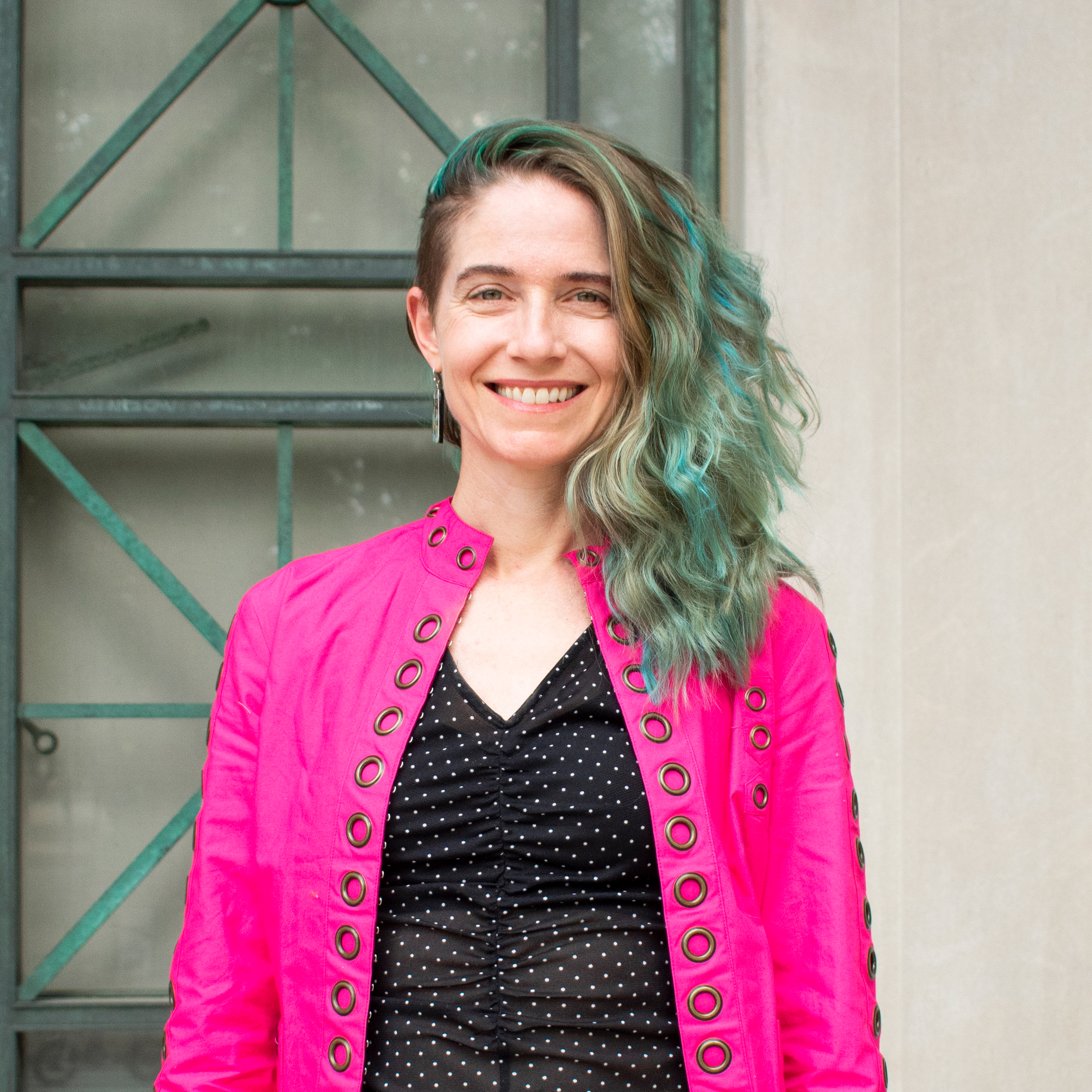


A fearsome feminist movemnet has sprung up in response to an epidemic of feminicide in South America, achieving change thanks in large part to an innovative data activism campaign. Cathering D’Ignazio of the Data + Feminism Lab at MIT wrote a wonerful book that doesn’t just chronicle the movement, but acts as a handbook for using data in fights for justice.
Catherine D’Iganzio runs the Data + Feminism Lab at MIT, where she is Associate Professor of Urban Science and Planning in DUSP. Counting Feminicide: Data Feminicide in Action is out now on MIT Press. Catherine will be running a free online book club this summer, and you can register now (English | Spanish | Portuguese).
Transcript
Ethan Zuckerman:
Hey everybody, welcome back to Reimagining the Internet. I am Ethan Zuckerman, your host, and I am really thrilled to be here today with my friend Catherine D’Ignazio.Catherine is director of the Data and Feminism lab at MIT, where she’s an associate professor of urban studies and planning. She’s the author of two books, the widely celebrated Data Feminism with Lauren Klein, which came out in 2020 and coming out on April 30, Counting of Feminicide: Data Feminism in Action. Catherine sometimes describes herself as a hacker mama. She has been involved with feminist hackathons and lots of work with data activists. For quite a while her email said that she made art and code and babies. I will say just in the interest of full disclosure, not only are Catherine and I good friends, but I had the pleasure of advising her master’s degree at MIT. So lots of conflicts of interest, but all in the best ways. Catherine, it is so wonderful to have you here.
Catherine D’Ignazio:
I’m thrilled to be here. And yeah, and it’s still true. Yeah, art and software and babies.
Ethan Zuckerman
Now, you know, teenagers.
Catherine D’Ignazio:
The babies are teenagers. But yeah, they’re still babies. They still need that, you know, hand holding a lot of the time.
Ethan Zuckerman:
But three successful projects launched into the world.
Catherine D’Ignazio:
That’s right. I deployed them.
Ethan Zuckerman:
So yeah, we’re not going to get into MIT employer dye, that gets really dark when you start talking about parenting. And honestly, there’s enough darkness in this interview. But Before we get into really important and somewhat dark things like feminicide, let’s start by talking about data feminism because you have the Data and Feminism lab. And you wrote a book that has become extremely influential. It’s being taught all over the place called Data Feminism with your colleague Lauren Klein. What is data feminism Catherine?
Catherine D’Ignazio:
Sure. So, Lauren Klein and I, what we did in that book was we brought together intersectional feminist theory and activism for projects, and then brought those to bear on thinking about data science. And, you know, really, it’s sort of the question, the main question the book answers is, what does feminist data science look like? And how do we do data science in a feminist way? And so the book covers seven principles, which we derive, but they’re not like only our ideas. They’re from, you know, decades and centuries of feminist thinking, but then as applied to data science. So their principles like examine power, challenge power, embrace pluralism, consider context, stuff like that. And there are things that we were observing were not really necessary to be doing in data science, especially if you aim for your data science to sort of have positive and transformational effects on the world, sort of like, you know, bending it towards justice. But that really wasn’t happening in kind of the common sort of understanding and practice of data science. So, yeah.
Ethan Zuckerman:
So data science has really emerged as a field on its own in the last maybe 15 to 20 years. I think a lot of universities – and of course you and I both both teach at universities – sort of look at data science as a classic case of emergence of the field, right. People have been doing database work and data visualization and science around data. But the notion of data science as its own thing is fairly new. What was wrong with data science that made it so important to put a feminist lens on it?
Catherine D’Ignazio:
Yeah, well, I mean, and here I’ll say even actually I think Data Feminism was sort of born from my time specifically at the Media Lab. Because you know I came into the Media Lab, my first year studying with you was 2012. And at the time, there was so much hype that was the moment of now we’re in a moment of hype over AI. That was the moment of hype previously around like big data and predictive analytics and stuff like that. And one of the things I was sort of stopped by, I think from the Media Lab culture is sort of shocked is that there were literally no conversations happening at least in that environment around power, around missing data, around well maybe we don’t have all the data that we need, around well which institutions data institutions collect in the first place around who’s represented who’s not represented who’s at the table who’s not at the table. You know, we just weren’t having any of these like critical or justice oriented conversations with data was more the sort of what I would call positivist hype. And so it was like, I think that was very formative and thinking about, oh well, maybe we need a primer for people. Once a lot of stories started to come out around bias and data and bias and algorithms and things like that. We saw Joy, our colleague Joy Buolamwini work start to rise in attention. A lot of the ways that the popular press was covering these stories was always like shock, you know, I was like, Oh my God, how can a soap dispenser be racist. They’re like, oh my god, how could Amazon build a hiring system that’s discriminating against women’s resumes or something like that and then. So like the other thing that, you know why Data Feminism felt necessary at that time is sort of like. In fact, if you’re coming from a feminist lens or any kind it doesn’t have to be feminist but any kind of power aware theoretical background. I think we’re very predictable, like we would expect this to happen in an unequal world or our world is riddled with inequalities. There’s no reason to think that our databases, or algorithms would like not have those also.
Early on when we first started talking about the work. I remember someone saying to me in a workshop after we had done a talk, Lauren and I both were present. They were like, well that was really interesting I thought we were going to be like making quilts or something with data. Like, this is not far beyond what I expected. I thought that it was kind of interesting that they thought data feminism would be about quilting or like I don’t know kind of feminized.
Ethan Zuckerman:
Nothing wrong with quilting like perfectly. It’s a great way to do data viz.
Catherine D’Ignazio:
It’s just very interesting like we say data feminism, you say quilting. That was like one thing and but that wasn’t like a pushback out there just like the expectation. The thing is that I think earlier, we got more pushback around those sorts of data or not. Now I think there’s much more acceptance of that or at least we don’t run into that. We still get questions around why feminism, like why is it called Data Feminism? Why isn’t it just called data justice or data equity or something like that, you know, I think it’s a very legitimate question because we do talk a lot but like we talk about a lot more than gender. We’re really coming from an intersectional feminist standpoint which means, you know, kind of very least like race and gender. But I also like thinking about what other intersectional forces of inequality that we need to be looking at. But our answer is always really clear. It’s like we are drawing from feminism like that is our, that’s the lineage that we’re drawing from. It’s the literature we’re drawing from, it’s the activism we’re drawing from. That’s the lens and someone else and other people have written about data justice as a concept. Other people could write about I don’t know critical race theory and data and have a different lens, you know, but this was the book that for us was urgent because we just saw such a lack of feminism in data science both like practice and discourse. Yeah.
Ethan Zuckerman:
So I wanted to start with Data Feminism because I wanted to sort of clarify that this isn’t just data visualization around quote unquote women’s issues. It is a critical stance on the production of data and sort of where it comes. It’s really important for framing the context around this new book that you have coming out that I’ve had the pleasure to read, Counting Feminicide: Data Feminism in Action .So walk us through feminicide what it is and how has it become such a major locus for for your work and your study?
Catherine D’Ignazio:
Sure. Yeah, thanks. Yeah, so maybe I should explain these two words because they’re both sort of in the book although I had to kind of land with one of them for the title. But there’s femicide and feminicide. They largely described the same thing. There is a slight variation definition, but both of those are feminist concepts for naming the killing of women for gender related reasons. So, where these concepts come from is feminist activism and it’s from feminist activists, looking around, and looking at things like what we call here in the United States intimate partner violence or domestic violence. So, killings of women where they’re killed by their intimate partner. Also, other types of fatal violence that go beyond just the partner involve violence such as familial or community violence. Violence where organized crime involves violence because the person is sex worker in some kind of client relationship. Violence for various other kinds of reasons and so the idea with feminicide is to try to link all of these kinds of gender related instances of fatal violence and call these put these under the same umbrella and say this is feminicide and to say this is a structural phenomenon. And it’s very like, there’s a really interesting rhetorical move that’s coming with the introduction of the concept and the use of the concept, because often what happens is like an illegal system if we think about these cases, especially in the case of domestic violence or intimate partner violence. These get treated very individually as cases where you’re not typically linking a case to a broader structural violence framework. you’re just saying like, oh, this and like this person was killed by her partner, and it’s like his problem like he is the perpetrator of a crime and it’s like looked at more at this like interpersonal scale. What the feminist activists are trying to do is say, well, yes, like we need to consider that scale certainly, but then we also need to put it in this framework of like, if you look at how women die, they are disproportionately being killed for gender related reasons, much more so than say men and they’re killed in these very, I don’t know often like grotesque or spectacular or sort of horrendous ways that relate to reasons of power and control and domination in a very sort of sexist or kind of like machista society. So it’s worthwhile to try to link all of these things together under this sort of common rubric of feminicide and to try to solve this, not at the interpersonal scale but to try to solve it at a higher level scale.
Ethan Zuckerman:
Got it. So, when I was sort of first talking with you about the book, I used the term intimate partner violence and you were very strong about sort of saying yes, and not just that. But there are also cases of, you know, so-called honor killing right, where you might have familial or community violence. But you’re also drawing connections to people getting killed for being involved with sex work and really sort of expanding this out, and essentially saying, there is a common thread between domestic violence and a partner violence. Familiar community violence, violence because someone is a sex worker, targeting women via organized crime. And that common thread is both people being killed for gender related reasons and killed in ways that are around power control or domination. Unfortunately, I suspect this is a global phenomenon. What has rooted so much of this work in Latin America for you?
Catherine D’Ignazio:
Yeah, yeah, Latin America is, I would say currently the center of gravity for feminists organizing around feminicide. So one of the things it is like you’re saying, certainly this is a global phenomenon. And there are national organizations like the UN that have been looking at this for decades and decades, as well as of course like different kinds of grassroots efforts in different places. One of the things that’s been interesting in the past, what 25, 30 years, is the organizing that’s gone on in Latin America. And so specifically this was put, I think on the agenda of global activism there in the 2000s, if you think back to Ciudad Juarez so there was like a kind of very high profile moment when Ciudad Juarez, Mexico made the global news for sort of systematic way in which young, often women of color, often immigrants who worked in the maquiladoras, the factories there were being targeted and killed. And then was taken up in the Mexican legislature and then was taken up by many different sorts of feminist movements across the continent, which has also culminated in a lot of laws. So there’s been a lot of legal progress in Latin America to the point where almost every Latin American country currently has a lot about either femicide or feminicide in the books. And so in 2015, there’s this key moment. This is where I start to get into internet culture where two very high profile killings happen in Argentina. Where two young women were very savagely killed by their partners. One was a teenager who was pregnant. And a high profile journalist posted this tweet and said, “Hey, everybody, all you women out there, you need to get together, we need to do something because they are killing us”. And so this color list in what we now call me ni una menos, not one less woman and the implication there, in which hundreds of thousands of people turned out for the seat of government in Buenos Aires, Argentina, in June of 2015. And then the protests spread and they’ve spread globally around the world. And now even to this day, they’re still being sort of commemorated every year on that same day. And so it’s really been the subject in the past like 10 years of very intense feminist organizing in Latin America where they’ve done a lot to raise awareness.
Ethan Zuckerman:
And if you spend any time in Latin America these days you will see ni una menos on the walls all over the place. It really has become a rallying cry. And on the one hand, it’s fantastic that you’re seeing recognition of this cultural phenomenon that you’re seeing legal responses to it. And my guess is that we probably don’t have as accurate a picture of what’s actually going on on the ground with feminicide as we would like, and I’m guessing that, in part through your framework, which suggests that data is culturally constructed and that we may not have the right categories or the right methods to understand and track feminicide. Let’s start with first with the question of is feminicide increasing or decreasing? What are the trends in the region and can we know.
Catherine D’Ignazio:
Yeah. I mean, I think the issue is we can’t really know. So, one of the key demands of ni una menos that in that first instance in 2015 was that they demanded a national registry basically database. They wanted the government to track this. And this is what most of the activists that I feature in the book. It’s almost like exactly how they start their work is they say I want to go out and I want to look for information. I want to know just kind of like how prevalent this is. Is it just asking simple questions like this, is it getting better, is it getting worse? Like did this or that policy make a difference right? But it turns out that in fact it’s very difficult to ask those kinds of questions, because for the most part, no government collects systematic data and certainly doesn’t if even if they do they don’t make it available to the public there are partial machines for various kinds of things. But in general it’s extremely hard even though laws are on the books. It’s extremely hard to get comprehensive information at the scale of the country. And it’s in fact like why the activists start doing the work they’re doing because they say well if the government isn’t doing this, we are going to take this on. If not at the same comprehensive scale because we mostly recognize they are not going to be able to do it at the institutional scale. At least we’re going to do it in such a way that it could gather attention and most of the time like what they want to push for at the institutional level.
Ethan Zuckerman:
Tell us about some of these activists who are trying to figure out is feminicide on the rise or falling? How are they doing that? What does the data look like and how are they finding that data?
Catherine D’Ignazio:
Yeah, yeah, I mean the person who I lead the book with is the first data activist that I learned about and is probably also the most famous. Her name is Maria Salguero. She works in Mexico. And so since 2016, she has been collecting data about feminicide and in fact she now maintains the largest public database of feminicide in the country. So 2016 to 2024, that’s like eight years basically right of doing this work. And the way that she does this has shifted over that time period, but the way she started was solely based on media reports. And so that was her main source. So basically every day she spends two to four hours a day scanning media reports plugging in different Google searches to source things, but then also going to like very specific newspapers in particular the tabloids, which often report on this kind of violence at a really, really sensationalist and misogynist and like racist horrible way. But she knows, sort of, she goes there to find the information and the details that she’s looking for. Once she finds an article where you know this describes a case of feminicide, she would like then just basically copy and paste the details into a form that she has on her website and then that submits into her database. It varies for different groups but like in her case for example she’s collecting like over 100 different variables about each case so it’s like 100 different tiny little pieces of information that she’s searching through news articles for and often needing to triangulate because as we know like the tabloid press and in particular like the tabloid press, especially if they’re reporting like immediately after something happened is not always correct. So often the activists need to kind of triangulate and make sure that details, you know, even just basic facts are correct in the news article. And the interesting thing that’s happened with her and with some of these other activists is then like once they start to get known for their work. People start to send them cases and so now she still is looking through media sources and so on, but she also has an extensive tip network, including folks even some kind of like informants and government who tell her about some specific cases. And then people send her case. She’s a member of all these different WhatsApp groups that are monitoring and so on. And so that’s like another kind of interesting way is these kinds of citizen networks that then end up kind of feeding this information process. And so that’s how it works and it’s just, it’s an incredible, you know, one of the things I think that I was struck by as I was first like we started with the research team like interviewing activists is just the very manual nature of the work and also the time that it takes and I think also the emotional labor that it takes. And so if you look at the stories, the stories that they’re using as primary sources, they’re horrible, you know, they’re describing the very brutal ways that people were murdered, the way that their bodies were found, the reactions of family members. Sometimes it’s children, you know, all of the activists we’ve interviewed talked about the incredible emotional burden of doing the work. And there are various strategies like caring for themselves and then also caring for their team because they often are working collectively they don’t all work alone. And then, you know, because that’s like a whole additional sort of layer on top of the hours of kind of pouring over these different kinds of news articles.
Ethan Zuckerman:
So, inspired by people like Maria Salguero and these other stories about collecting this data and both the amount of manual labor that’s involved with it, as well as just the enormous emotional impact of being involved with this, you’ve been building tools to work on this problem. Tell us a little bit about the tools that you’ve been building and you know how it changes the equation a little bit as far as tracking and counting for feminicide.
Catherine D’Ignazio:
Yeah, sure. Yeah, and I want to mention to you like the work of this project is collaborative. So it’s a project that the overall project is called Data Against Feminicide. And it’s myself and I just want to mention all my collaborators, Helena Suárez Val, Silvana Fumega, Isadora Cruxên, we’re the lead organizers. And then we have several partners, including Rahul Bhargava, who are like really important collaborators on the project as well. And yeah, and I think that’s one of the things that we started doing these interviews and it really they were at first they were informal conversations with activists. And then one of we really realized two things right at the beginning, because we were talking to activists like what do you need, like what would make the process easier. And first of all, activists wanted to talk to each other. So, one of the things we started doing as the data against the feminicide project was just having events where activists could talk about their work and share tips and tools and we have been having workshops and things like this. So that’s one side of it which is like a kind of community building effort. And then on the other side, activists were very interested in general they’re like a pretty, I would say they’re not none of them are, none of them are really like technical by professional training like a lot of them are like doctors or nurses and things like that but they’re not necessarily coming from like computer science, specifically, but they’re all pretty, I would say, techie in the sense that they’re managing like large databases or spreadsheets. They are super savvy in terms of their media ecosystem, they know exactly where to find different kinds of information and how much to trust different sources. And so they really wanted to be able to share with each other but then they love the idea of any kind of technical tools that could streamline this work. And so that’s something we started talking about with them really early in the process is like 2020. So we ran a co-design process with groups in the US and groups in Argentina and Uruguay. And yeah and what we came up with were a couple of different tools. One of which is more like it’s less of a tool and more of like a platform, but it’s specifically designed to try to reduce the emotional labor of the work. And this is a tool that we’re building with Rahul and with the Media Cloud platform. And it’s this idea, essentially Google Alerts. So basically Google Alerts for feminicide and very tailored to a specific geographic context. So the idea is like activists say I’m monitoring the feminicide aside in Argentina. And so each day our system goes out talks to Media Cloud sources news articles that it thinks might be about feminicide. It passes those through a machine learning classifier which does an additional kind of filtering down process. And those articles that pass the threshold then get delivered to the activists as email alerts and then they have like a dashboard as well. And so these tools have been pretty successful. We now have like 40 groups actively using these tools to source from in a side and a whole range of different countries. And in fact, there’s one group coming on board right now in Kenya. So we’re going to see how it works in Kenya and whether we might need a different feminicide machine learning model actually for the Kenyan context or not.
Ethan Zuckerman:
This is so again in the spirit of disclosure: Media Cloud is a project that I started many, many years ago at Harvard and brought to MIT. At MIT you actually did some very critical sort of deep work on disambiguating place locations with a library that still gets used today I believe called Cliff Clavin, which is wonderful.
Catherine D’Ignazio:
People still email us about it.
Ethan Zuckerman:
Yeah, it’s a wonderful cheer joke based on, you know, those of us who were, you know, alive in the 1980s to watch that sitcom. But so this is a data set that you’ve been working with for years and years and Rahul Bhargava is a close colleague of both of ours. He’s a professor at Northeastern. I mean Catherine, one of the things that is so interesting about, you know, as you sort of put it Google alerts for feminicide is that so much of our dialogue right now about AI is huge companies building AI systems that may be making very biased decisions inflicted on vulnerable populations. When you describe the system that you’re building, you tend to gravitate towards machine learning rather than to AI and this is a truth of almost everyone who actually works with complex systems is that, you know, AI is still this sort of big nebulous promises to do everything. You’ve got an AI here that’s co designed with activists focusing on this incredibly challenging issue. What are some of the lessons that you could sort of take from building these systems about building a feminist a AI, a decolonial AI, that might actually give some feedback and give some hope to this broader industry that has so many challenging ethical problems right now?
Catherine D’Ignazio:
Yeah, yeah. Yeah, so that’s one thing that’s one thing. And then, you know, I think the other thing is really thinking about participatory processes sort of like and this is where the question of like, who is at the table when we’re building these systems. Because one of the things that’s very important about this particular task is like, well, all of the groups we’re working with, mobilize this concept like either working with feminicide or femicide as a concept. They actually have different definitions. And so like that there are different definitions that are specific to the ways that violence unfold in their context. So, like, for example, the group that’s monitoring feminicide in Columbia, and has specific categories for violence against migrants because they’re having so many refugees from Venezuela coming in right now. They have a lot of categories and subcategories for Narco violence because of organized crime and the drug trade and things like that and the different and complicated ways that women are caught up with that. And so like the, well, on the face of it, they’re monitoring the same concept, there’s like different ways that it manifests in different places. And so it’s been really important to us if we’re going to build a system that’s useful across these contexts that we work in a participatory way and that we understand some of those differences and that our platform can accommodate those differences in context while still kind of serving their needs. And so I think that has only been possible through participation and deep relationship building. And, you know, that’s where I think to the, this isn’t just not something that happens in the current, you know, AI model of like the Googles and Metas and whatevers. This is not how things work. There’s not a deep investment in a particular application area and there’s no relationship building with the groups that will eventually be the end users. How do we model a different technological future, which would need a different organization of resources and a different kind of investment. And it’s one that wouldn’t be driven by profit?
Ethan Zuckerman:
What is the tension like for you between being an activist this is clearly activist work, being a scholar and being a tool builder being a software developer those are three distinctly different roles. How do they play together? And how does the book sort of play into those three different roles?
Catherine D’Ignazio:
Sure. Yeah, no, that’s a great question. I think about this alot. Yeah, in the book I say that I am using solidarity as a method, which is a great it’s a great paper actually about sorts of work where she’s an ethnographer but in a feminist organization but she’s also aline she’s like wants to work in the service of their goals as well and so I mean that’s that’s a little bit how I feel. Where it’s like I am using solidarity as a method like I’m kind of squarely together with them and I want to at some level provide some small service that would help them continue their work. Like in the service of sort of the sustainability of this kind of work which I see as being extremely important. And again there’s sort of like the local expert knowledge producers, often not as valued as say like I don’t know if the UN came in and wrote a report or something like that you know so sort of like how do we how do I lend some small hand but I might have to do those endeavors. But then I’ll just say the work as a, in the sense that it’s a scholarly work I think it’s also one of the scholarly contributions that it can do is to at a basic level just document some of these practices, because in fact I feel that the more I got to know about how feminicide data activists are working with data, the more I was both very moved, actually, like just moved at the, the labor and the care with which they engage in that work, and also just struck by how extremely different it is than our kind of regular conventional notions of data science like the way that people speak about their work, the way that they undertake their work is very different. So it’s really different from Western discourse around data science and data ethics and stuff like that. And so I think that’s where the scholarly piece can come in and because it can say like, what are we learning from observing these data practices and the service of justice that could be potentially, you know, taught in other contexts or used in other contexts. What does this show us about maybe how we’re missing some things in conventional kind of AI data science discourse. And some of those things are things like deep and intimate relationships with their local communities, care, memory justice, there’s this incredible way that the data activists relate to their databases. Many of them articulate how they are caring for memories, you know, they’re doing memory work, and there’s this incredible attention to the details of that. And, yeah, like the sort of, I think one of the activists described her database as a sacred space, or the database itself as a kind of a memorial. And it’s just not the way that you hear data scientists and like, I don’t know, Wired Magazine or something talking about their databases, you know. And so I think there’s something incredibly powerful about the way that they don’t forget that their data are connected to people in the world.
Ethan Zuckerman:
I had thought that I was going to ask you a last question like about what you hope for the impact of the book but like I actually think I can anticipate the impact of the book. I read the book. It’s really really good. If there is justice in the world. It’s going to really shift how people think about who is the data scientist, what is data, the politics around it and so on and so forth. So I’m going to ask you a different question which is a professorial question. You and I both have this experience of having young people and sometimes not so young people walk into our labs. They love technology. They love data. They see the power of it. But they also want to heal and transform the world. And so much of the work that people do with data and technology feels harmful and dangerous rather than healing and repairing. How do you help people find their way around that set of questions?
Catherine D’Ignazio:
Yeah. Thank you for asking that. Yeah you know, ever since this book and another work that’s going on at the lab, I’ve been thinking so much about healing recently. As you probably saw in the book, you know, I’m talking about the work of restorative and transformative data science, like how we use data science to restore and heal and then transform the world that we live in. And I think it’s really complicated, but where we start at least in the lab is through relationships, you know, and so like really by prioritizing the real world needs of our partners. You know, which sounds pretty basic actually. But like I think that’s the main thing and in fact, a lot of what I’ve learned recently. And what I’ve been thinking about recently has come from a collaboration which we are doing right now with a group called the Waking Women Healing Institute, in which they work on related topics, missing and murdered indigenous women and girls. And everything they do, they’ve really encouraged us and we’ve been designing some databases for them, also a map, and everything they do is guided by healing, and I’ve just, I found that really moving. It is also provocative to think about what the database and the service of healing look like, like what AI and the service of healing look like. And there has been, I think, some really interesting work recently in HCI around trauma informed computing, you know, like really thinking about, like, if we’re talking about rectifying inequalities. We first have to start a healing process, you know, we have to start a kind of a reparative or reconciliation process because so much harm has been done from the ruptures in the world. And so how do we use, you know, information technologies and the service of that. And so I think that’s, you know, it’s like relationships are like one of the main things and then and then dialogue and a supportive community. And that’s one of the things I feel like I learned from you, Ethan, is like, you know, creating like a really beautiful community where, like it’s not just Catherine that like waves her hands and says smart things, but like it’s everybody in the community who can support each other and support new people coming in and telling us about their work and this kind of exchange and open dialogue. I think that’s where we start right, so yeah.
Ethan Zuckerman:
And that notion of community is so interesting Catherine because you know, Mike and I have now been doing this podcast for a long time, and you know are heading towards the hundredth episode of it. And really working all through the pandemic and sort of into time at UMass. And I think some of it began as a response to having sort of lost that community in Boston of people who were involved with civic tech as we all sort of went to different places during the pandemic. And then of course, losing the Center for Civic Media at MIT over the Jeffrey Epstein revelations and such. I think a lot of what I found myself trying to do is build a broader sense of community and I think about people like Diana Freed, who does work on computing and victims of domestic violence. I think about Tracy Chou, who’s been on our show a couple of times talking about harassment instead of tools around it, and sort of thinking about ways that we can build dialogue between people we’ve been lucky enough to talk about in the podcast but really the sort of broader sense of people who are looking at technology for for justice and technology for healing. The book is Counting Feminicide: Data Feminism in Action, that’s coming out with MIT press and should be out by April 30. You can preorder a copy, which is a nice thing to do for authors. The author is our wonderful friend Catherine D’ignazio, associate professor at DUSP at MIT. Catherine, it is such a pleasure. Thank you.
Catherine D’Ignazio:
Thank you so much for having me. What a pleasure for me too!